AHSYNC BYTES - Weekly Digest (15th Dec, 2025)
Stay updated with this week’s key tech movements: powerful AI launches, strategic industry collaborations, essential Angular performance techniques, and timely insights into agent frameworks and software supply-chain risks.
Welcome to another week of innovation and insight. In this edition, we unpack the latest advancements in AI, explore impactful Angular updates, and highlight powerful shifts shaping the web development landscape. Consider this your guide to staying informed, inspired, and technically confident.
🤖 AI & Machine Learning
Google Launched its Deepest AI Research Agent Yet — On the Same Day OpenAI Dropped GPT-5.2
Google released on Thursday a “reimagined” version of its research agent Gemini Deep Research based on its much-ballyhooed state-of-the-art foundation model, Gemini 3 Pro.
This new agent isn’t just designed to produce research reports — although it can still do that. It now allows developers to embed Google’s SATA-model research capabilities into their own apps. That capability is made possible through Google’s new Interactions API, which is designed to give devs more control in the coming agentic AI era.
 Julie Bort
Disney Signs Deal with OpenAI to Allow Sora to Generate AI Videos Featuring its Characters
The Walt Disney Company announced on Thursday that it has signed a three-year partnership with OpenAI that will bring its iconic characters to the company’s Sora AI video generator. Disney is also making a $1 billion equity investment in OpenAI.
Launched in September, Sora allows users to create short videos using simple prompts. With this new agreement, users will be able to draw on more than 200 animated, masked, and creature characters from Disney, Marvel, Pixar, and Star Wars, including costumes, props, vehicles, and more.
 Aisha Malik
3 Subtle Ways Data Leakage Can Ruin Your Models (and How to Prevent It)
In this article, you will learn what data leakage is, how it silently inflates model performance, and practical patterns for preventing it across common workflows.
Topics we will cover include:
- Identifying target leakage and removing target-derived features.
- Preventing train–test contamination by ordering preprocessing correctly.
- Avoiding temporal leakage in time series with proper feature design and splits.
 Iván Palomares Carrascosa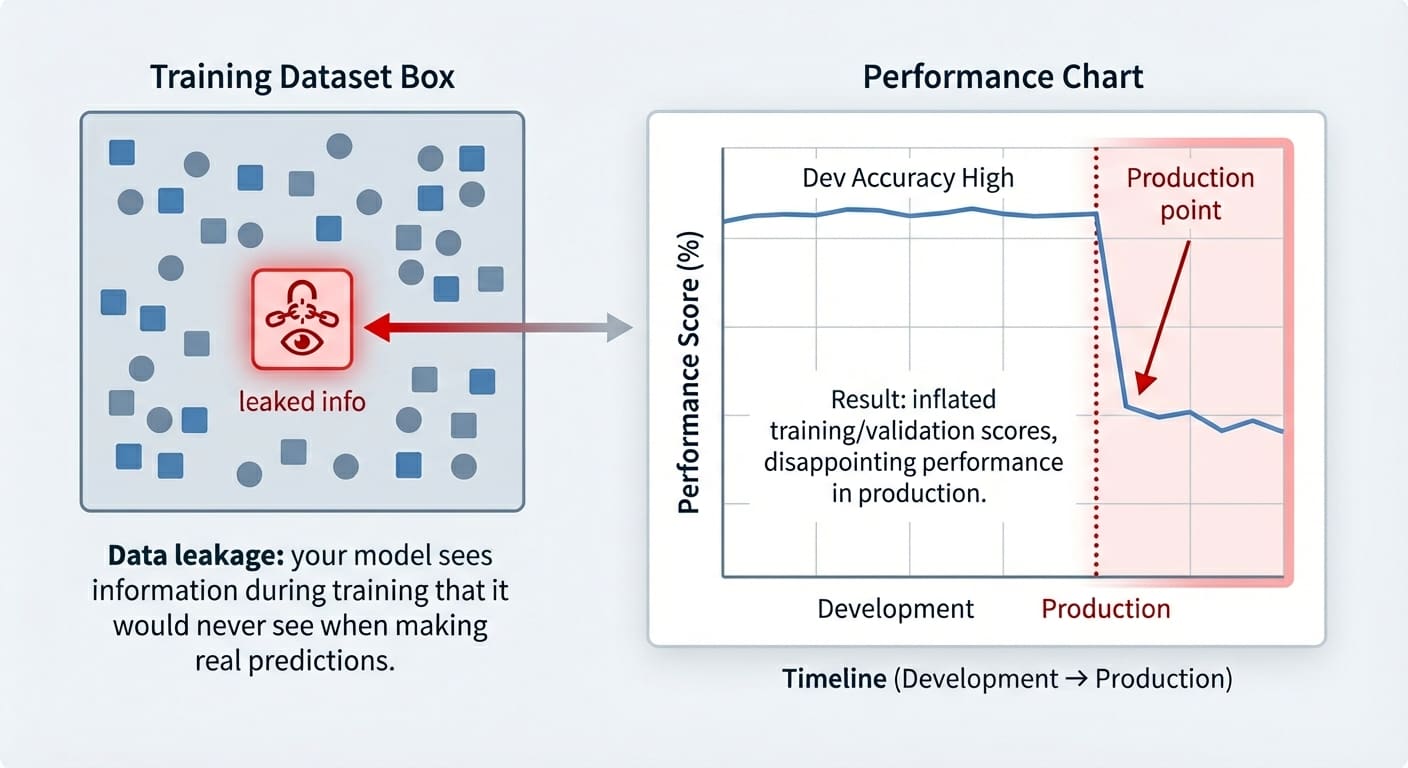
🚀 Angular
Angular Material vs PrimeNG – Which Works Better for Enterprise?
Developers building Angular apps often run into the same set of challenges: tight deadlines, complex UI requirements, accessibility demands, and the pressure to deliver polished experiences fast. Building UI components from scratch is expensive and maintaining them at scale is even harder. That’s why modern Angular teams depend heavily on UI component libraries to speed up development and ensure consistency.
But choosing the right UI library isn’t always a straightforward process. To come to a conclusion, people need to evaluate Angular UI libraries against different criteria, feature set, development capabilities like freedom and customization, support, maintenance, and so forth. For many teams, the most common comparison comes down to Angular Material vs PrimeNG – two of the most widely adopted open-source Angular component libraries today.
 Katie Mikova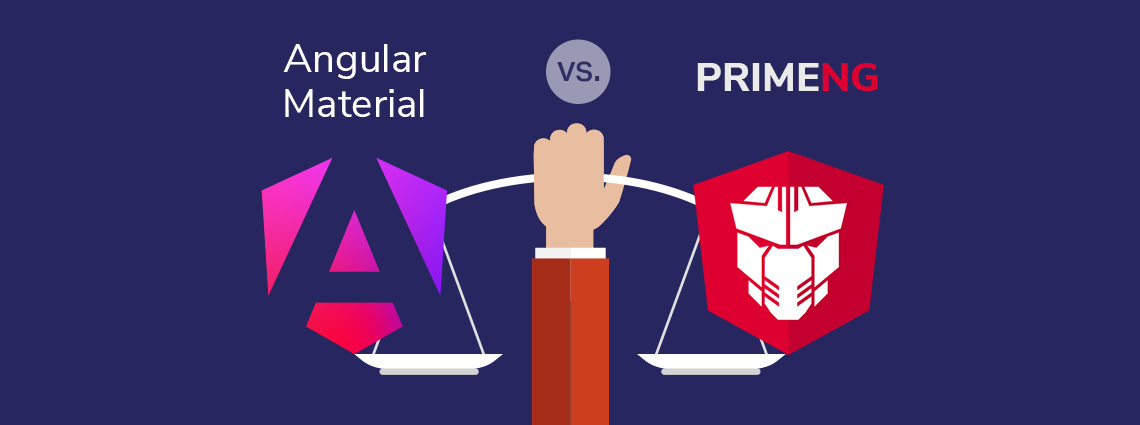
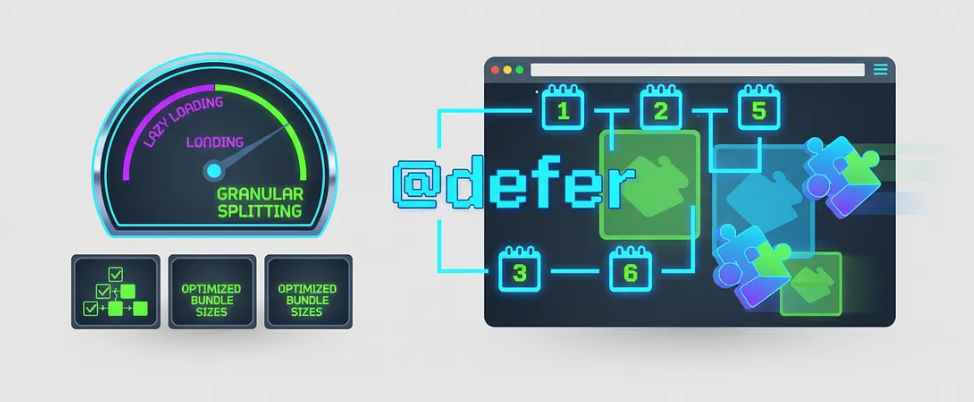
Implement @defer for Granular Code Splitting in Days — Step-by-Step
Picture this: you slash your Angular app’s initial bundle by 40% in days, loading those heavy charts only when users scroll down — no routing headaches required. Angular’s @defer (dropped in v17) is your new best friend for smart, template-level lazy loading of standalone components, directives, and pipes—perfectly teaming up with router lazy loading to crush Core Web Vitals like LCP.
Whether you’re a beginner dipping into @defer magic, an expert tweaking performance, or a stakeholder chasing that ROI from snappier apps, this guide's got you. We'll roll through hands-on steps, code snippets, killer triggers (viewport scrolls, button clicks), placeholder tricks to kill layout jank, and error-handling smarts—skipping compiler deep dives.
Ready to prefetch on idle, render on hover, and watch your app fly? Let’s dive in and supercharge your Angular game! Read more.
Angular pipes: Time to rethink
Angular’s toolkit provides developers with just a few core primitives to solve a wide range of tasks. In my previous articles, we’ve already explored a fundamental concept — Directives, and tried to articulate the core idea behind it.
This time, we’ll take a closer look at Pipes, whose role in Angular is becoming a subject of reconsideration with the introduction of the new reactivity system. Read more.
Upcoming Events
- JavaScript & Angular Days: March 20-24 2026 - Munich, Germany (and Online)
- International JavaScript Conference: May 11–15, 2026 - London, UK
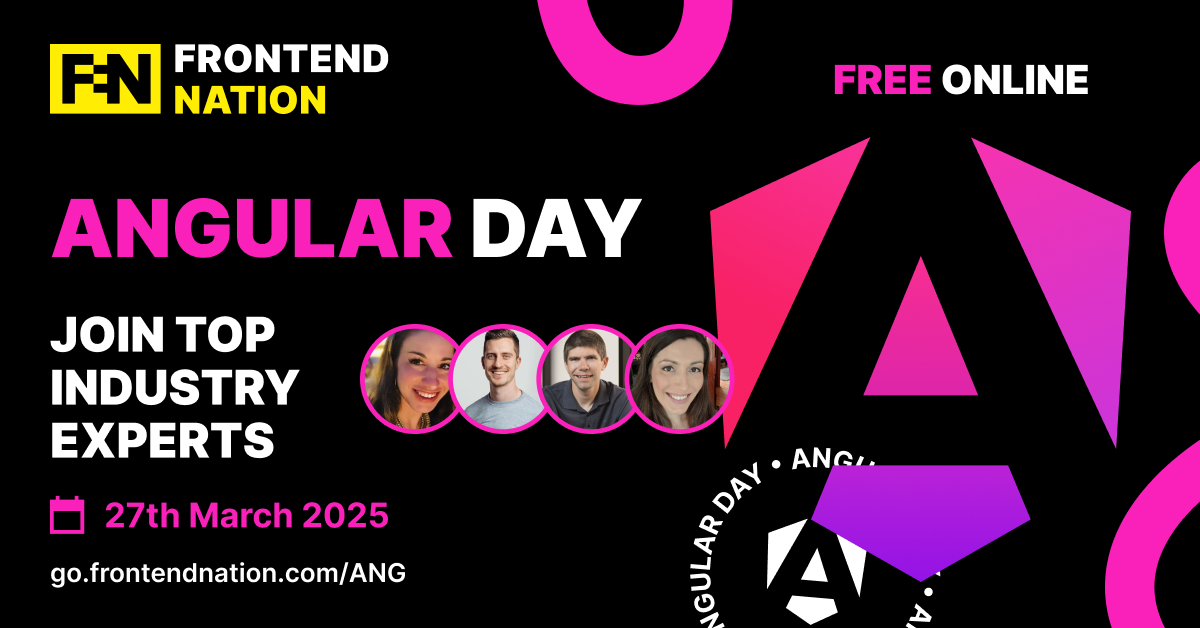
- Angular Day: will be held in 2026, Get notified yourself!





🌐 Web & Frontend
Building Agents With the ADK and the New Interactions API
The landscape of AI development is shifting from stateless request-response cycles to stateful, multi-turn agentic workflows. With the beta launch of the Interactions API, Google is providing a unified interface designed specifically for this new era—offering a single gateway to both raw models and the fully managed Gemini Deep Research Agent.
For developers already working with the Agent Development Kit (ADK) and the Agent2Agent (A2A) protocol, this raises an exciting question: How does this new API fit into my existing ecosystem?
The answer is two-fold. The Interactions API acts as both an alternative to the existing generateContent inference API endpoint and as a powerful primitive you can use within an existing agent framework.
 Mike Smith
3 BIG Mistakes COSTING Your AI Agents! (and how to fix them)
Stop building AI agents that hallucinate and leak data.
If you've tried building AI assistants with pure Large Language Models (LLMs), you know the struggle: they are black boxes, impossible to debug, and prone to prompt injection attacks. In this video, I show you how to tame the "wild animal" of Generative AI using Rasa.
We will build a production-ready B2B Sales Assistant from scratch. We’ll combine the flexibility of LLMs for natural language understanding with the reliability of deterministic flows (CALM) for business logic.
Malware Campaign Uses VS Code Extensions for A/B Testing
A new malware campaign is A/B testing delivery effectiveness on software developers using malicious VS Code extensions.
In a campaign tracked by Koi, a threat actor published two malicious VS Code extensions – ‘Bitcoin Black’ and ‘Codo AI’ – to see which lure worked best. One targeted crypto enthusiasts; the other, productivity-focused engineers. Both delivered a capability that turned the developer’s own workstation into a surveillance post.
The attackers combined social engineering with DLL hijacking to bypass standard controls, using a legitimate signed binary to load their payload. It is a case study in how the software supply chain is being probed for weak points; specifically targeting the tools developers often trust blindly.
 Ryan Daws
Upcoming Events
- Web Summit Qatar: February 1-4, 2026 - Doha Qatar
- ConFoo Montreal 2026: February 25-27, 2026 - Montreal, Canada. Visit Site
- Frontend Nation: Comming in 2026! Free Online Live Event




💡 Bottom Line Up Front
The latest industry updates reveal an AI landscape marked by powerful new tools, strategic collaborations, and crucial reminders about secure and leak-free model development. These trends underline how quickly and responsibly the field is shifting.
Angular and frontend ecosystems also show momentum, introducing smarter code-splitting, refined UI choices, and renewed discussions around framework primitives. Combined with emerging agent APIs and security-focused findings, this digest equips developers with timely awareness for the week ahead.
I hope you find these helpful. If you do, please share our blog with others so they can join our amazing community on Discord (link below)

Don't miss out – join our awesome community to grow as a tech enthusiast, and to help others grow.
As always, Happy coding ❤️