
AHSYNC BYTES - Weekly Digest (1st June, 2026)
AI tooling matures, Google consolidates its ad stack, and the frontend world debates framework bias. Five stories, one digest, everything engineering and product teams need to stay current this week.
Wondering what’s next for AI, how to optimize your Angular apps, or what the frontend community can’t stop talking about? We've got you covered. This week, we’re unpacking it all—delivering actionable insights, practical updates, and the key trends you need to stay ahead in the ever-changing world of web development.
🤖 AI & Machine Learning
Anthropic Releases Claude Opus 4.8
Anthropic has released Claude Opus 4.8, an upgrade to Claude Opus 4.7 that the company says brings improved results for coding, agent work, reasoning, and knowledge work. The platform can be used through claude.ai, Claude Code and the Claude API, with the API name claude-opus-4-8.
The company has also altered some of the details of its product line-up. Users of claude.ai and Cowork can set the amount of effort Claude applies to a response – essentially, affecting the number of tokens the model will burn. Claude Code also has dynamic workflows, a feature that plans work, runs parallel sub-agents, verifies outputs and reports back to the user. Finally, the Messages API accepts live changes to the messages array, which Anthropic says lets developers update instructions during a task without breaking prompt cache use or needing a separate user turn.
 AI News
Google Folds Display Ads into AI-first Demand Gen Platform
Google is folding Display Ads into its AI-powered Demand Gen platform, marking the end of a long-standing digital advertising model.
The Google Display Network (GDN) has been a staple of the open internet for almost twenty years. Marketers previously relied on its predictable framework to target placements, bid on audiences, and A/B test static creative across news sites and blogs. That familiar setup is changing and requires marketing teams to move away from manual campaign controls and rely on Google’s AI.
Google describes this change as a natural progression and presents it as a method for advertisers to reach visual platforms like YouTube, Discover, and Gmail through one consolidated campaign.
 Ryan Daws
YouTube Adds New Podcast Features, Including an AI Recommendation Tool and ‘Auto Speed’
YouTube announced on Thursday it’s introducing new podcast features for Premium users, including an AI-powered recommendation tool, an “Auto speed” setting, and a new on-the-go listening mode.
The update signals YouTube’s ongoing efforts to compete with other platforms for podcast audiences, especially as streaming giant Netflix is investing heavily in video podcasts. Additionally, by focusing on personalized discovery and hands-free listening features, the company also appears to be targeting users who consume podcasts on audio-first apps like Spotify and Apple Podcasts.
 Aisha Malik
Serving Multiple Users at Once: How Continuous Batching Keeps LLM Inference Efficient
In this tutorial, we take a hands-on approach to understand:
- Why does static batching create a bottleneck and waste tokens on padding
- How dynamic scheduling admits new requests the moment a slot opens
- How ragged batching allows multiple prompts to be processed together
By the end of this tutorial, you will have a working code that demonstrates how continuous batching works.
 Yoyo Chan
🚀 Angular
Agentic Engineering: Which LLM Is Best for Angular Development?
In the article "Agentic Engineering: Which LLM Is Best for Angular Development?" from ANGULARarchitects, the author evaluates the practical performance of leading frontier AI models through the lens of modern Angular development. As defined in the piece, there is no single "perfect" model; instead, different LLMs excel in distinct areas.
For instance, the evaluation ranks Opus 4.7 as the top choice for complex architecture and planning, GPT 5.5 as the strongest for everyday implementation, and Composer 2.5 as a high-speed, cost-effective option for Cursor users. To read more about how these models compare in real-world workflows, check out the article linked below.
 Alexander Thalhammer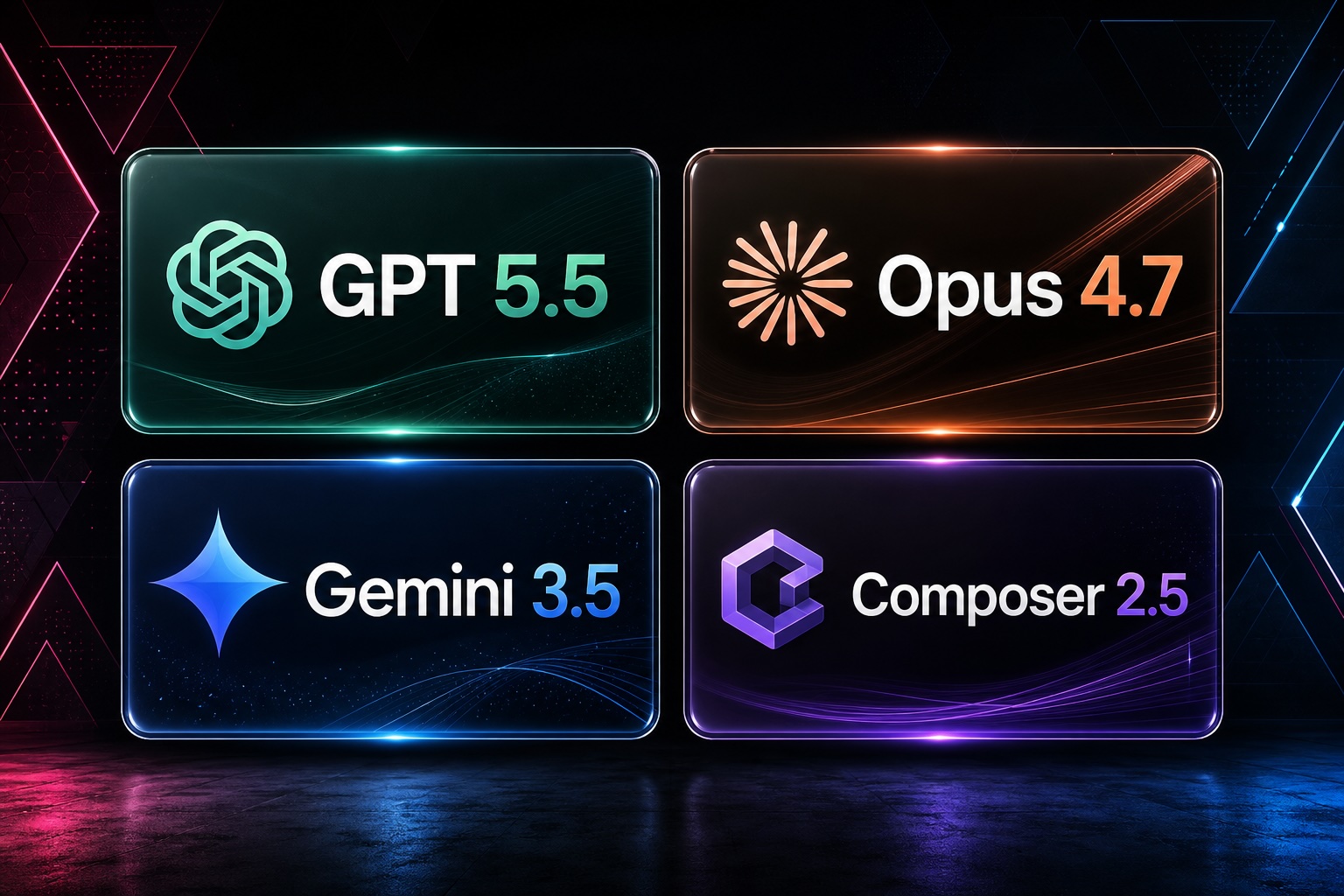
Guards and Resolvers – Controlling Navigation Flow
Guards control access, while resolvers are responsible for fetching data. Together, they help us protect routes and pre-load essential information. Even though we use them in almost all of our apps, we often don’t fully understand how they actually work. Writing this article helped me realize that I had never truly understood it, and putting this piece together helped me fill those gaps in my own knowledge.
Guards act as checkpoints that determine whether we can access specific routes. They execute certain actions based on whether access is granted or denied. As always, Angular meets our needs by making guard creation seamless. We can generate a new guard straight from CLI.
 Jakub Bryska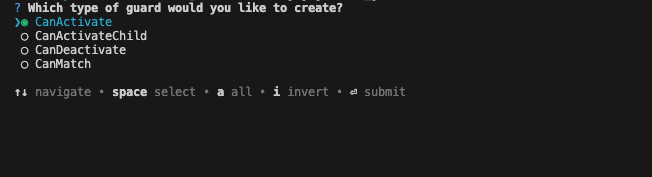
How I Made My A2UI Dashboard 300 Times Faster
In the article "Agentic Engineering: Which LLM Is Best for Angular Development?" from ANGULARarchitects, the author evaluates the practical performance of leading frontier AI models through the lens of modern Angular development. As defined in the piece, there is no single "perfect" model; instead, different LLMs excel in distinct areas.
For instance, the evaluation ranks Opus 4.7 as the top choice for complex architecture and planning, GPT 5.5 as the strongest for everyday implementation, and Composer 2.5 as a high-speed, cost-effective option for Cursor users. To read more about how these models compare in real-world workflows, check out the article linked below.
 Manfred Steyer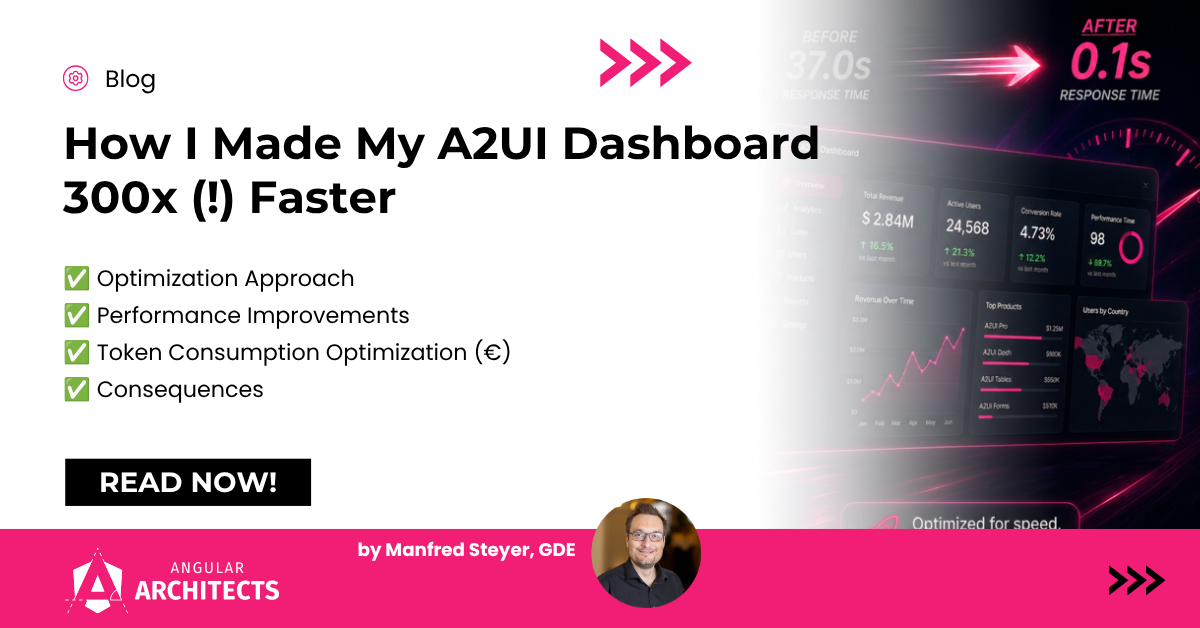
Upcoming Events
- NG Kenya 2026: August 21-22, 2026 - Nairobi , Kenya
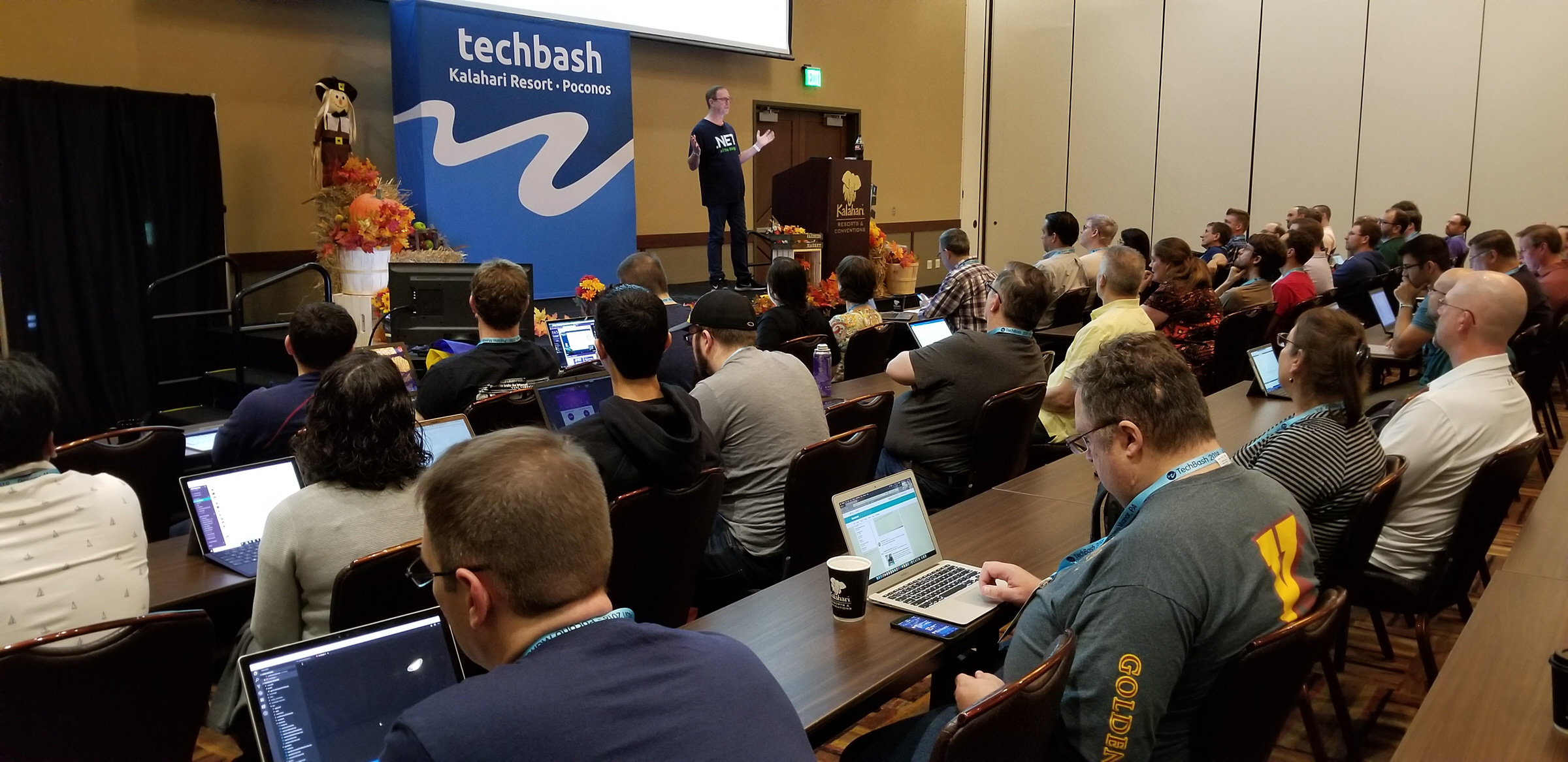
- TechBash 2026: October 13-16, 2026 - Kalahari Resorts, Pocono Manor, PA
- Angular Day: will be held in 2026, Get notified yourself! Read more
 Angular Kenya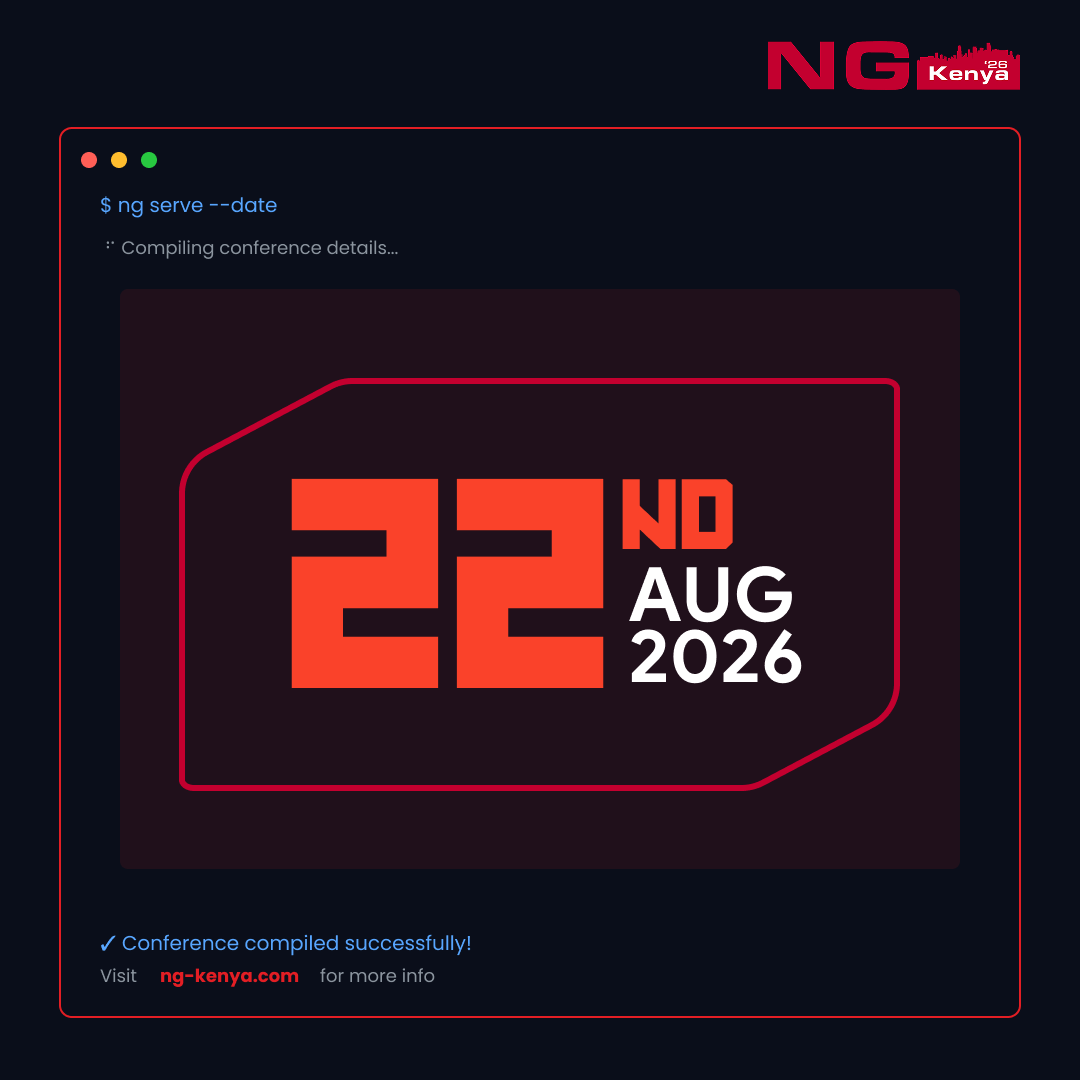

🌐 Web & Frontend
Supercharge Your Integration Workflow with the Google Pay & Wallet Developer MCP Server
Modern AI agents and IDEs, like Antigravity, Cursor, Visual Studio Code, and others, often lack the specific, real-time context about your Google Pay & Wallet accounts, the latest API updates, or your integration status. The Model Context Protocol (MCP) is an open standard designed to bridge this gap, allowing AI agents to securely and reliably interact with external tools and services.
The new Google Pay & Wallet Developer MCP server provides a set of tools that your favorite AI development assistants can use to bring essential Google Pay & Wallet functionality right into your development environment.
 Jose Ugia
Your AI Assistant Is a React Fanboy and You Should Be Worried
In the article "Your AI Assistant Is a React Fanboy and You Should Be Worried," Author defines how AI coding assistants are heavily biased toward recommending React and Next.js by default. As defined in the piece, this preference is driven by training data dominance and vendor tool integrations, rather than actual architectural superiority.
Relying blindly on these default AI recommendations can lead teams to overlook other frameworks that might better suit their specific project requirements. To read more about how this feedback loop affects development decisions, check out the article linked below.
 Karol Modelski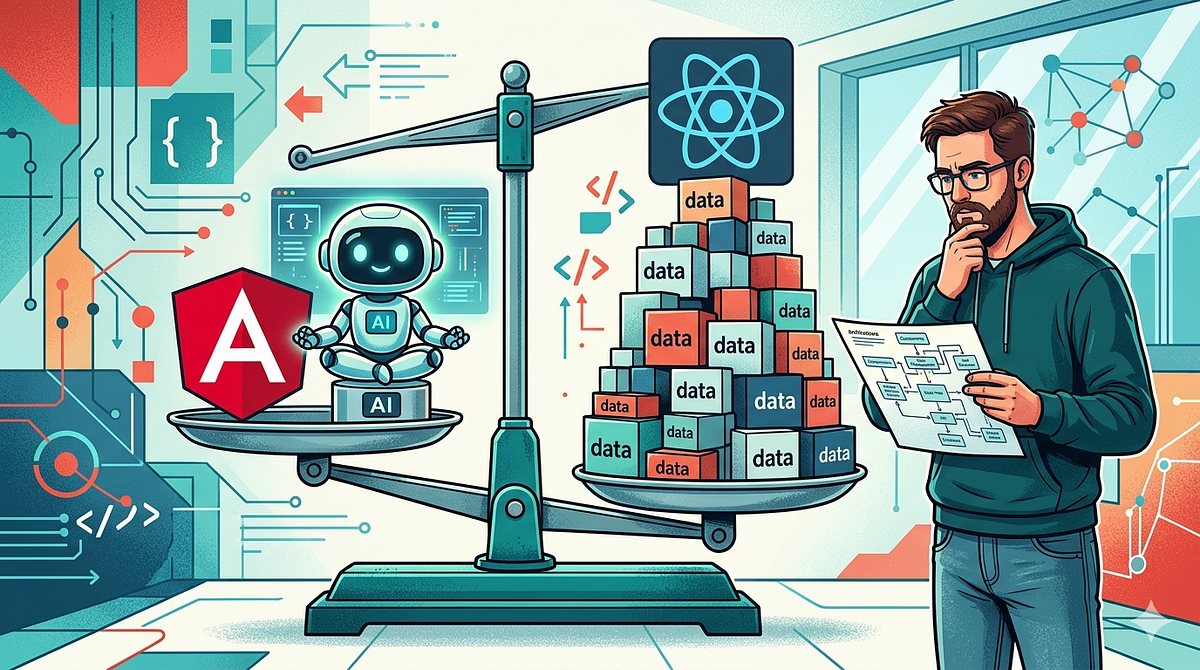
Production AI Agents vs. Reality: What Breaks and Why
How do you keep long-running AI agents stable when APIs timeout or servers crash? In this video, we explore Google’s new Agent Development Kit (ADK) 2.0 and look at why native session persistence still leaves a reliability gap for production agent pipelines.
To bridge this gap, we implement Agentspan—a durable execution runtime built on Orkes Conductor. You will see how to configure a multi-agent system that can survive process deaths, programmatic kills, and network drops, resuming automatically without starting from scratch.
All code showcased in this video is open-source (MIT License) and self-hostable.
Upcoming Events
- International JS Conference: June 2-3, 2026 - San Diago
- Frontend Nation: June 3 – 4, 2026 - Register now!
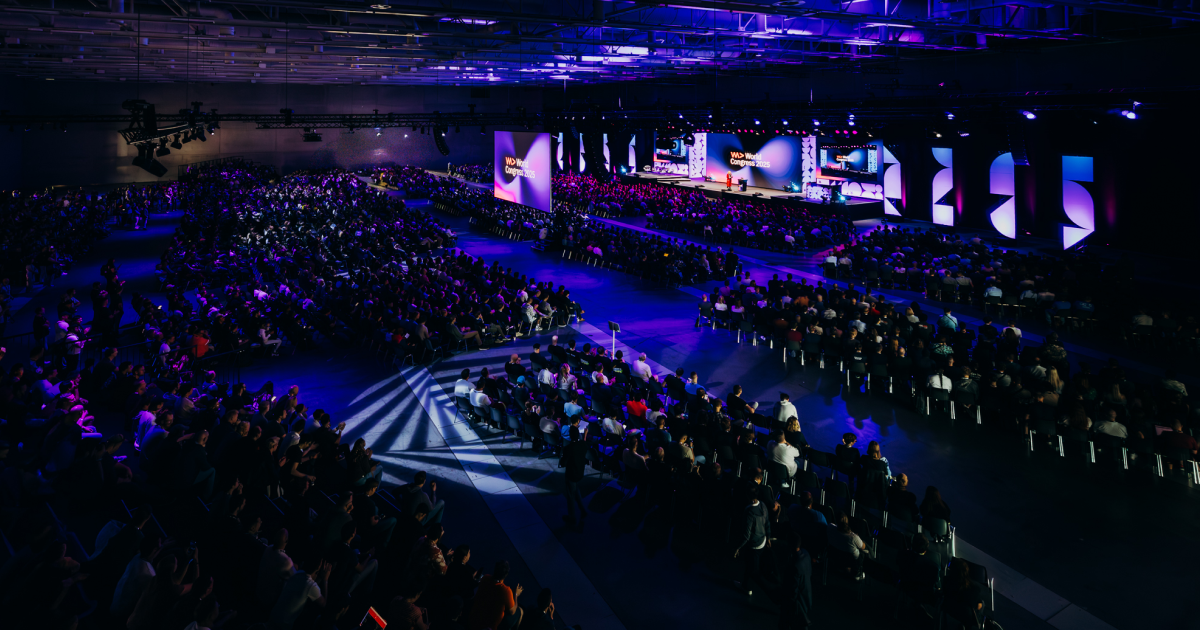
- WeAreDevelopers World Congress: July 8-10, 2026 - Berlin, Germany




🌟 Code With Ahsan Community
Student Ambassador Program Launch
We have officially opened applications for the Student Ambassador Program and we are searching for enthusiastic and motivated university students who are eager to represent and be the voice of our community. This program is positioned as a significant opportunity for students to jumpstart their careers by gaining valuable experience and leadership skills.
Joining the program offers a range of benefits, including invaluable networking opportunities with peers and industry mentors, access to exclusive perks and learning opportunities, and the chance to receive stylish swag to represent the community. Interested students who are ready to learn, lead, and grow are encouraged to submit their applications through the official website linked below:
Monthly Learning Challenge: Covering Foundational Skills
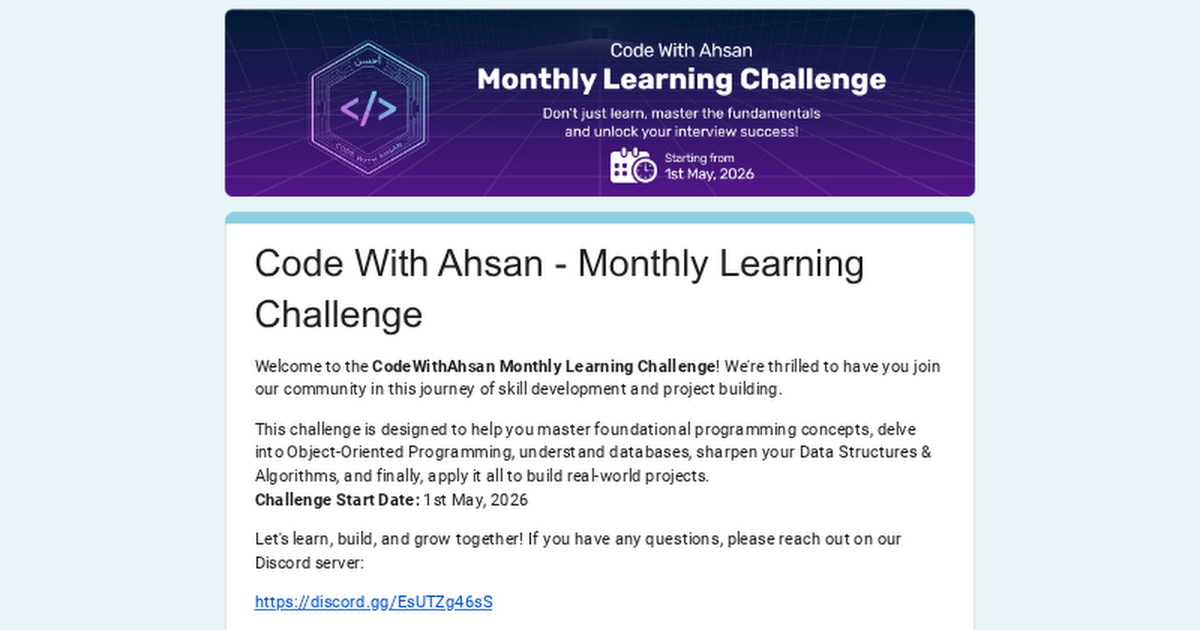
We are launching a Monthly Learning Challenge beginning on May 1st, 2026, designed to help participants enhance their coding abilities and prepare for interviews. This challenge will concentrate on Problem Solving and Logic Building. The program aims to provide a structured learning path for individuals looking to not just learn, but master these fundamental concepts.
To participate in this skill-building opportunity, interested individuals are required to register through the given Google Form.

Project Collaboration Program: Building Real World Projects
At Code With Ahsan, we have introduced a Project Collaboration Program designed to foster teamwork and innovation within its community. This initiative serves a dual purpose: it provides a platform for individuals with exciting project ideas to find and recruit skilled team members, and it offers a gateway for those looking to gain experience by contributing their skills to existing projects. The program aims to be a central hub for developers and tech enthusiasts to connect and find their perfect match for building and working on new ventures.
The Mentorship Program
Navigating a tech career can be overwhelming, but you do not have to do it alone. Our free Mentorship Program (launched in Nov, 2025) connects aspiring developers with experienced industry professionals.
- Need guidance? Find a mentor to help you accelerate your career, prepare for interviews, and successfully onboard into new tech roles.
- Want to give back? Experienced professionals can apply to become mentors and share their invaluable industry expertise with the next generation.

💡 Bottom Line Up Front
This week's digest covers significant shifts across AI, frontend, and developer tooling. Anthropic's Claude Opus 4.8 raises the bar for coding and agentic workflows, Google's Display Ads migration to Demand Gen signals a fundamental change in how marketers operate, and the frontend community is questioning whether
AI assistants are steering teams toward React by default rather than by merit. Angular developers gain practical guidance on navigation control and performance optimization. Meanwhile, the Code with Ahsan community expands its programs to support students and collaborative project development.
We hope you find these helpful. If you do, please share our blog with others so they can join our amazing community.
Don't miss out – join our amazing community and be part of something great!
As always, Happy coding ❤️
Sponsor Us
Boost your product's visibility! We at Code With Ahsan offer sponsorship opportunities to reach our community of 5100+ developers and professionals.
Contact us at [email protected] to learn more.
Share your Feedback
We value your opinion. Could you take a few minutes to give us feedback on our weekly newsletter? Here's the feedback form link:

OR, Scan the QR Code below: