AHSYNC BYTES - Weekly Digest (23rd Feb, 2026)
AI is moving from novelty to infrastructure. This week explores XR simulations generated by Gemini, conversational assistants inside TVs, and coding agents embedded in developer workflows. Meanwhile, Angular advances accessibility and experts caution that LLM-wrapper startups may struggle.
The tech world doesn’t slow down — and neither do we.
This week’s digest covers the most important updates in AI & Machine Learning, the Angular ecosystem, and modern frontend development. Quick, relevant, and worth your time. Let’s get started.
🤖 AI & Machine Learning
Turn Creative Prompts into Interactive XR Experiences with Gemini
With the release of Canvas in the Gemini web app, our Android XR team began to explore how we might use it to make immersive computing accessible to developers and users at large. We noticed that Gemini is particularly adept at generating interactive 3D web graphics, and asked a simple question: What if you could experience Gemini’s 3D web creations in extended reality?
To test this, our team collaborated to build an immersive biology simulation. Gemini first modeled the complex interactions between blood cells and rendered them visually using WebGL and Three.js. It looked like a living textbook illustration, but the shift occurred when we converted that content to XR using WebXR APIs. A button appeared on the screen: “Enter XR”. Exploring car-sized blood cells at a sub-cellular scale demonstrated Gemini’s capability to build fully realized, interactive XR experiences.
 Benjamin Hersh
Google VP Warns that Two Types of AI Startups May Not Survive
The generative AI boom minted a startup a minute. But as the dust starts to settle, two once-hot business models are looking more like cautionary tales: LLM wrappers and AI aggregators.
Darren Mowry, who leads Google’s global startup organization across Cloud, DeepMind, and Alphabet, says startups with these hooks have their “check engine light” on.
LLM wrappers are essentially startups that wrap existing large language models, like Claude, GPT, or Gemini, with a product or UX layer to solve a specific problem. An example would be a startup that uses AI to helps students study.
 Rebecca Bellan
YouTube’s Latest Experiment Brings its Conversational AI Tool to TVs
The race to advance conversational AI in the living room is heating up, with YouTube being the latest to expand its tool to smart TVs, gaming consoles, and streaming devices.
This experimental feature, previously limited to mobile devices and the web, now brings conversational AI directly to the largest screen in the home, allowing users to ask questions about content without leaving the video they’re watching.
According to YouTube’s support page, eligible users can click the “Ask” button on their TV screen to summon the AI assistant. The feature offers suggested questions based on the video, or users can use their remote’s microphone button to ask anything related to the video. For instance, they might ask about recipe ingredients or the background of a song’s lyrics, and receive instant answers without pausing or leaving the app.
 Lauren Forristal
Top 7 Small Language Models You Can Run on a Laptop
Powerful AI now runs on consumer hardware. The models covered here work on standard laptops and deliver production-grade results for specialized tasks. You’ll need to accept license terms and authenticate for some downloads (especially Llama and Gemma), but once you have the weights, everything runs locally.
This guide covers seven practical small language models, ranked by use case fit rather than benchmark scores. Each has proven itself in real deployments, and all can run on hardware you likely already own.
 Vinod Chugani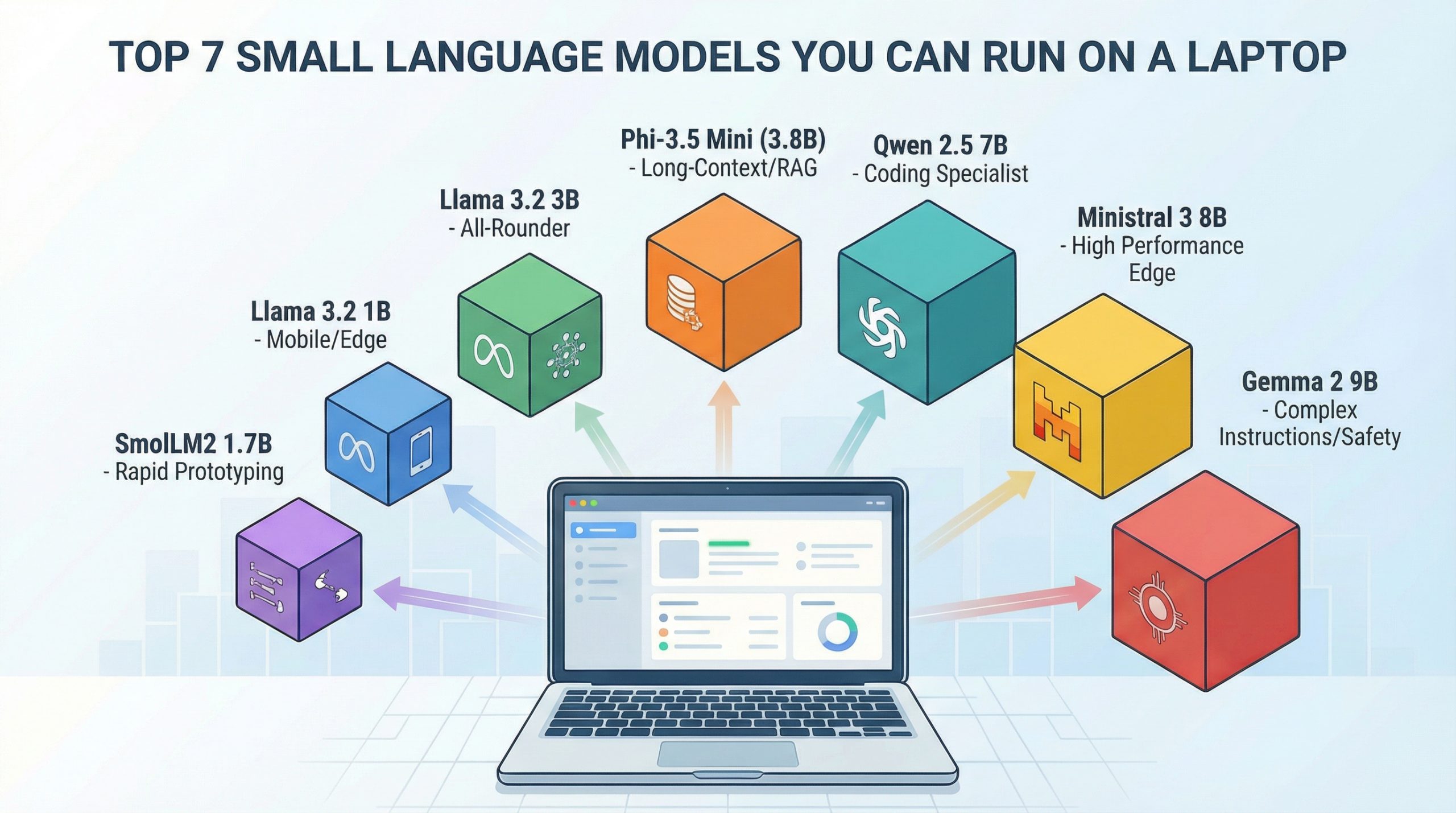
🚀 Angular
Best Angular Signals Data Sharing Patterns (Zoneless)
In this article, we’ll unpack how signals outshine RxJS subjects for shared state, why TanStack Query is your new API bestie, and real-world wins for devs, leads, and stakeholders alike.
Whether you’re battling legacy code or architecting the next big app, you’ll walk away ready to ditch the old ways and embrace reactivity that just works. Let’s dive in…Read more!
Angular Aria – A New Standard for Building Accessible Components
In this article, we will take a closer look at the new Angular Aria package, available starting from Angular version 21.
This package can be installed in our projects using the following command:
npm install @angular/aria@angular/aria is an official Angular library that provides so-called headless accessibility primitives – a set of directives and interaction patterns compliant with the WAI-ARIA specification.
It is important to note that this is not a collection of ready-made UI components. Instead, it provides directives that can be applied to custom components or HTML elements to enhance their accessibility behavior.
 Maja Hendzel
Angular 21: Internal Mechanics, ARIA, and AI-Powered Coding!
The momentum in the Angular world is unstoppable! With last year’s release of Angular 21, our community experts are already breaking down the new features, exploring the “magic” under the hood, and showing us how to build more accessible, modern applications. Read more!
Upcoming Events
- JavaScript & Angular Days: March 20-24 2026 - Munich, Germany (and Online)
- International JavaScript Conference: May 11–15, 2026 - London, UK
- Angular Day: will be held in 2026, Get notified yourself!






🌐 Web & Frontend
Agentify Your App with GitHub Copilot’s Agentic Coding SDK
In this article, you will learn how to build and embed an agentic Python assistant using the GitHub Copilot Agentic Coding SDK, including custom tools and multi-turn context.
Topics we will cover include:
- How agentic assistants differ from traditional automation and chat-style tools.
- How to set up the GitHub Copilot SDK in Python and run a basic tool-using agent.
- How to add file-access tools, permission handling, and multi-turn memory.
Let’s not waste any more time.
 Shittu Olumide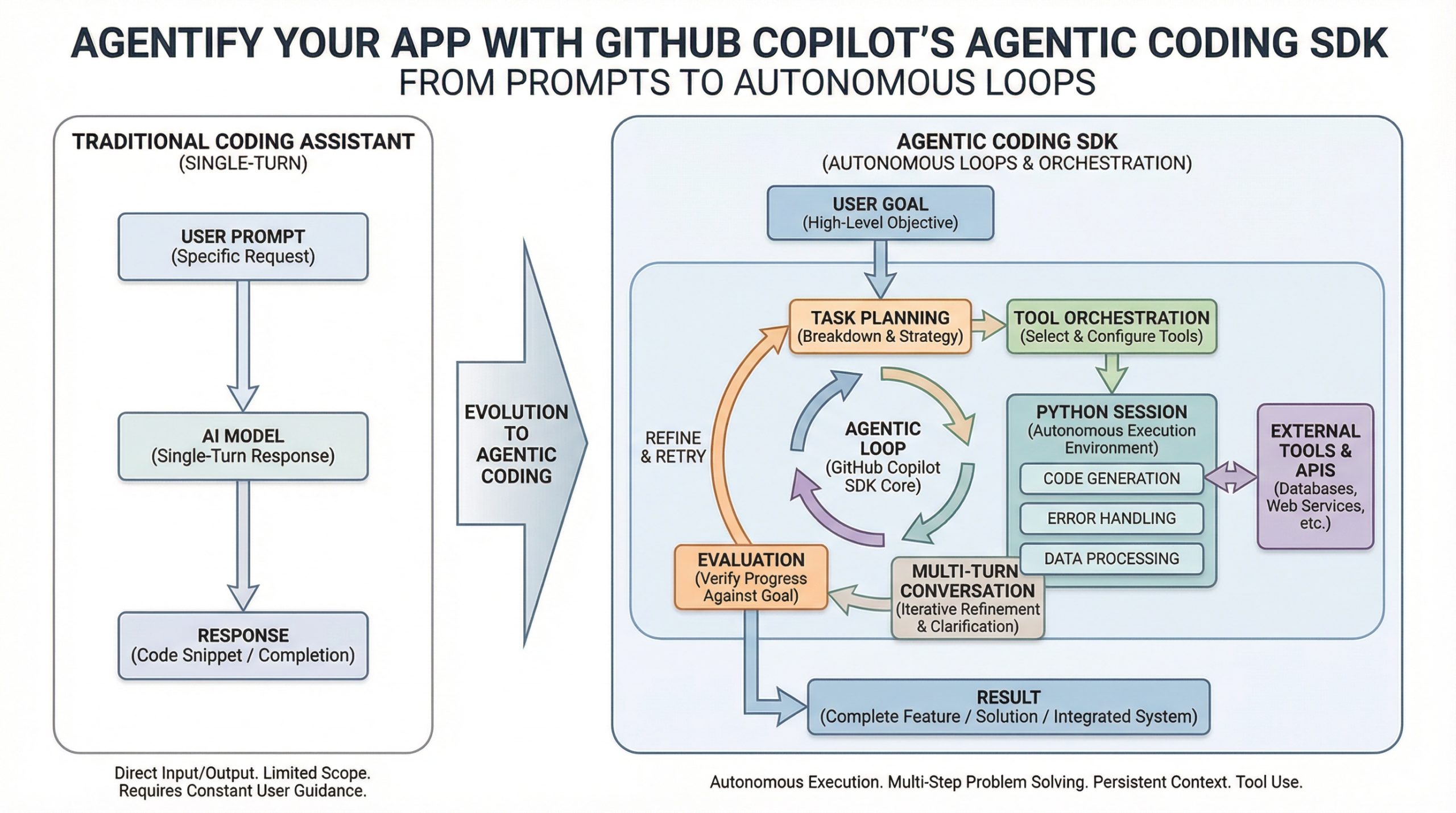
OpenAI Codex App Server decouples agent logic from UI
OpenAI’s Codex App Server aims to centralise agent logic to streamline integration across developer tools.
Integrating generative AI into developer toolchains typically creates a fragmentation issue. Building a coding assistant involves connecting user inputs to model inference and tool execution. When this capacity operates across command-line interfaces (CLI), integrated development environments (IDEs), and web apps, engineers often duplicate the logic for each surface.
OpenAI released the Codex App Server to fix this redundancy. The server uses a standard protocol to separate the agent’s logic from the user interface. For technical architects, this architecture shifts the “agent loop” from an implementation detail to a portable service.
 Ryan Daws
Developers Adopt High-Performance Java to Support Production AI
Java developers are simultaneously abandoning Oracle’s distribution to cut costs while expanding their use of the language to support production-grade AI.
The 2026 State of Java Survey and Report, published by Azul and based on responses from over 2,000 Java professionals, identifies a defensive transition away from unpredictable licensing fees alongside an offensive move to operationalise AI workloads.
 Ryan Daws
Upcoming Events
- GitHub at RSA 2026: March 23-26, 2026 - San Francisco, California
- ConFoo Montreal 2026: February 25-27, 2026 - Montreal, Canada. Visit Site
- Frontend Nation: Comming in 2026! Free Online Live Event



💡 Bottom Line Up Front
Across AI, web, and developer tooling, the dominant theme is operationalization. Organizations are no longer focused on proving that AI works; they are focused on where it lives — in TVs, developer workflows, immersive simulations, and local machines. The emergence of laptop-runnable models and XR-generated environments demonstrates increasing accessibility of advanced capabilities.
At the same time, the startup landscape is tightening. Industry leadership suggests companies providing limited differentiation over existing LLMs face sustainability risks, while frameworks and tools that improve reliability, accessibility, and integration are gaining importance. The technical direction favors systems architecture, not just model usage.
I hope you find these helpful. If you do, please share our blog with others so they can join our amazing community on Discord (link below)

Don't miss out – join our awesome community to grow as a tech enthusiast, and to help others grow.
As always, Happy coding ❤️
Sponsor Us:
Promote your product to a focused audience of 4000+ senior engineers and engineering leaders.
Our newsletter delivers consistent visibility among professionals who influence technical direction and purchasing decisions.
Availability is limited. Secure your sponsorship by contacting ahsan.ubitian@gmail.com