AHSYNC BYTES - Weekly Digest (6th Apr, 2026)
AI adoption is no longer optional, it's being tracked. This digest covers Gemma 4, Google's internal Agent Smith, Angular's Vitest migration, Taiga UI v5, and what China's Five-Year Plan means for global AI strategy.
Hey builders 👋
This week’s spotlight brings together the worlds of AI, Angular, and web development, delivering fresh updates, expert insights, and practical takeaways. Whether you’re coding, creating, or leading, stay informed on the trends driving digital transformation.
🤖 AI & Machine Learning
Google Now Lets you Direct Avatars Through Prompts in its Vids App
Google on Thursday added new features to its video editor app Vids, including directing and customizing avatars through text prompts, Veo 3.1 support, the ability to export videos to YouTube, and recording with a Chrome extension.
Users will be able to use natural language prompts to direct avatars to “act” in a scene. This can include the avatar interacting with a product, a prop, or a piece of equipment. The company said that despite the dynamic nature of the output, Vids maintains character consistency.
Google said that based on the theme of the video, users can customize characters by tweaking appearance, changing apparel, and creating new backgrounds through prompts.
 Ivan Mehta
Bring State-of-the-Art Agentic Skills to the Edge with Gemma 4
Google DeepMind launched Gemma 4, a family of state-of-the-art open models that redefine what is possible on your own hardware. Now available under the Apache 2.0 license, Gemma 4 gives developers a powerful toolkit for on-device AI development.
With Gemma 4, you can now go beyond chatbots to build agents and autonomous AI use cases running directly on-device. Gemma 4 enables multi-step planning, autonomous action, offline code generation, and even audio-visual processing, all without specialized fine-tuning. It’s also built for a global audience with support for over 140 languages.
 Google AI Edge Team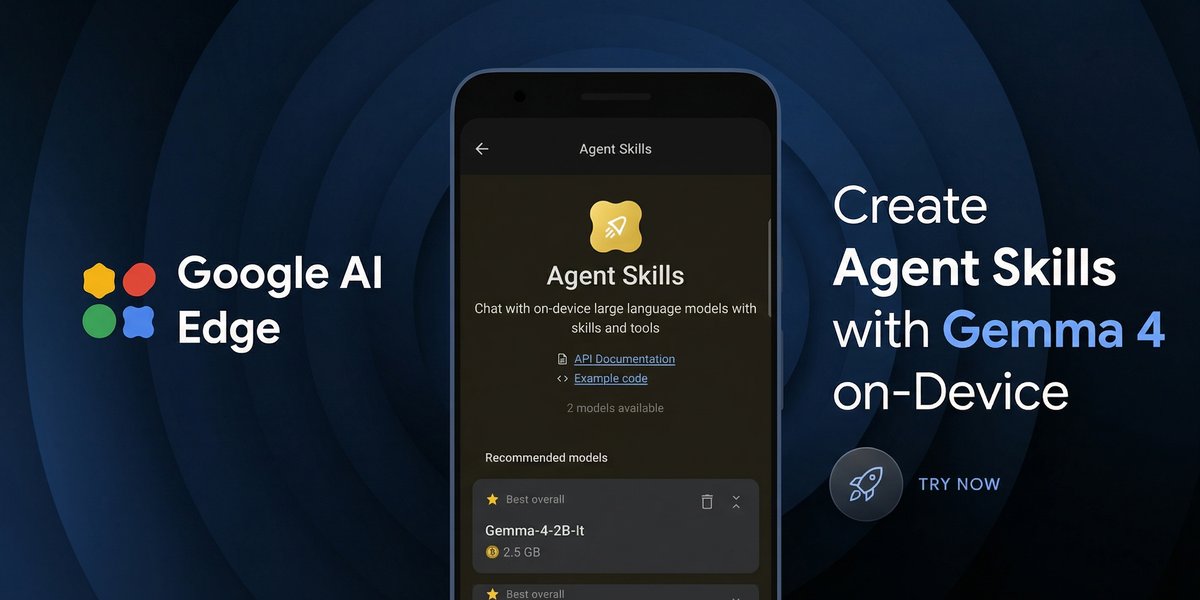
China’s Five-Year Plan Details the Targets for AI Deployment
China has approved its 15th Five-Year Plan [PDF] setting out the country’s economic, education, social, and industrial priorities through to 2030. As might be expected, there is a significant number of references to AI, with the technology mentioned in several contexts.
AI is grouped alongside quantum computing, biotechnology, and energy as paths that are to be pursued as part of the country’s strategic science policy. The document calls for more work in developing high-performance AI chips and the software to support them in this context. There’s also a commitment to academic and industry research on new model architectures and the core algorithms underpinning them.
 Joe Green
5 Best Practices to Secure AI Systems
A decade ago, it would have been hard to believe that artificial intelligence could do what it can do now. However, it is this same power that introduces a new attack surface that traditional security frameworks were not built to address.
As this technology becomes embedded in critical operations, companies need a multi-layered defense strategy that includes data protection, access control and constant monitoring to keep these systems safe. Five foundational practices address these risks.
 WebFX
WebFX
🚀 Angular
What’s New in Taiga UI v5: A Modern Angular UI Kit
Taiga UI is an Open Source Angular UI library that helps developers build modern, reliable user interfaces. We recently shipped the fifth major release, bringing a ton of architectural improvements and new capabilities. In this article, we’ll take a deep dive into the highlights of version 5.0.0 and explain why you should plan your upgrade as soon as possible.
In this new major version of our libraries, we raised the minimum supported Angular version to 19 and above. This means we can take advantage of all the new features and improvements added since Angular 16 (the minimum supported version in the previous Taiga UI major). And the paradigm shift toward a signal-based style has changed a lot in our codebase.
 Nikita Barsukov
Local AI, Reactive Routing, and the Vitest Migration! ⚡
The Angular ecosystem is expanding beyond the browser’s traditional limits! From running AI models locally to migrating your entire test suite to Vitest, Angular community experts are leading the charge into a more performant future.
Check out this article for more information!
 Angular
Migrate from Angular Testing Karma To Vitest
For years, the “default Angular testing stack” meant Jasmine + Karma: Jasmine provided the test API (describe/it/expect), while Karma acted as the runner that bundled your code and executed tests inside a real browser. That approach worked well historically, but it also accumulated friction: launching browsers is comparatively heavy, and keeping browsers available and consistent is a recurring pain point in CI environments.
If you visit Karma’s official GitHub page, you can read that Karma is now deprecated and does not accept new features or general bug fixes anymore.
At the same time, the wider JavaScript ecosystem has shifted towards faster, more developer-friendly tooling. Vitest runs tests in a Node.js process using a DOM emulation layer (typically happy-dom or jsdom), so you can test DOM-oriented code without launching a browser.
 Marcell Kiss
Upcoming Events
- NG Belgrade Conf 2026: May 7, 2026 - Balkans
- IJS Conference: June 2-3, 2026 - San Diego, United States
- Angular Day: will be held in 2026, Get notified yourself!
 Angular Belgrade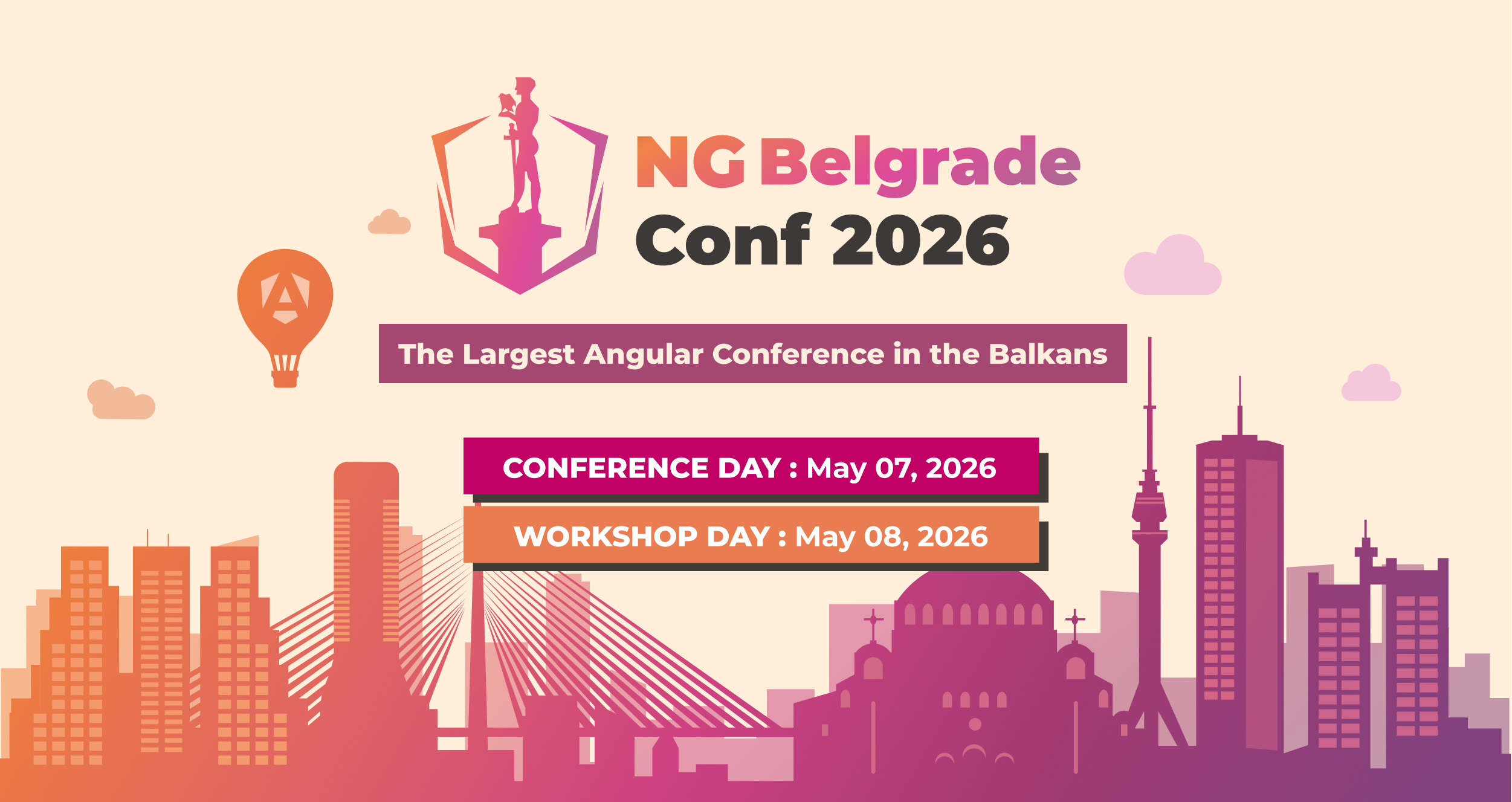




🌐 Web & Frontend
AI Coding Tools Move into Performance Tracking at Enterprise Level
A quiet shift is taking place inside large engineering teams. Writing code is no longer the only expectation. Using AI coding tools to help write that code is starting to matter just as much.
At JPMorgan Chase, that shift now appears to be part of how developers are assessed. The bank has begun pushing its engineers to use AI coding tools such as GitHub Copilot, not as an option, but as part of their day-to-day work. Internal systems track how often these tools are used, and developers are grouped into categories based on their usage.
According to Business Insider, engineers are labelled as “light” or “heavy” users depending on how much they utilise AI tools. The report suggests that this data may feed into internal performance tracking, implying that AI usage is starting to shape how developer output is assessed.
 Muhammad Zulhusni
Google Tests Internal AI Agent for Coding Tasks and Workflows
A shift is taking place inside software teams. Coding assistants that once helped with small tasks are starting to take on larger roles. At Google, that shift is showing up in an internal system known as “Agent Smith,” an AI agent designed to handle parts of the development workflow with less human input.
Details about the system emerged from recent internal discussions reported by The Times of India, which cited remarks from Sergey Brin during a company town hall. According to the report, Google is testing an AI agent that can automate coding tasks and handle parts of development workflows. The report also says the system connects with internal tools used by developers.
This reflects a broader change in how AI is being used in software work. Earlier tools focused on code suggestions or autocomplete. Systems like Agent Smith point to something else: software built to handle multi-step tasks with less step-by-step input.
 Muhammad Zulhusni
My Next.js 16 Full Stack Crash Course (React 19 & Prisma)
Ready to master full-stack web development? In this complete Next.js crash course, you will learn how to build and deploy a production-ready application from scratch.
We are moving past basic React and diving deep into Next.js 16, building a real-world "Agent Skills Manager" app. You'll learn essential enterprise-level concepts like App Router, file-based routing, and the differences between SSG, SSR, ISR, and CSR. By the end of this video, you will have a fully functional, authenticated app deployed live on Vercel.
What you will learn & use:
- Next.js 16 & React 19 Fundamentals
- Prisma ORM & PostgreSQL for Database Management
- Tailwind CSS & DaisyUI for rapid styling
- Persistent Authentication with Cookies
- Deploying to Vercel for Production
Developer’s Guide to Building ADK Agents with Skills
Your AI agent can follow instructions. But can it write new ones? Agent Development Kit (ADK)'s SkillToolset enables agents to load domain expertise on demand. With the right skill configuration, your agent can generate entirely new expertise at runtime. Whether you need a security review checklist, a compliance audit, or a data pipeline validator, the workflow is straightforward: generate it, load it, and use it.
The SkillToolset achieves this through progressive disclosure. This architectural pattern allows agents to load context precisely when it is needed, rather than cramming thousands of tokens into a monolithic system prompt.
 Lavi Nigam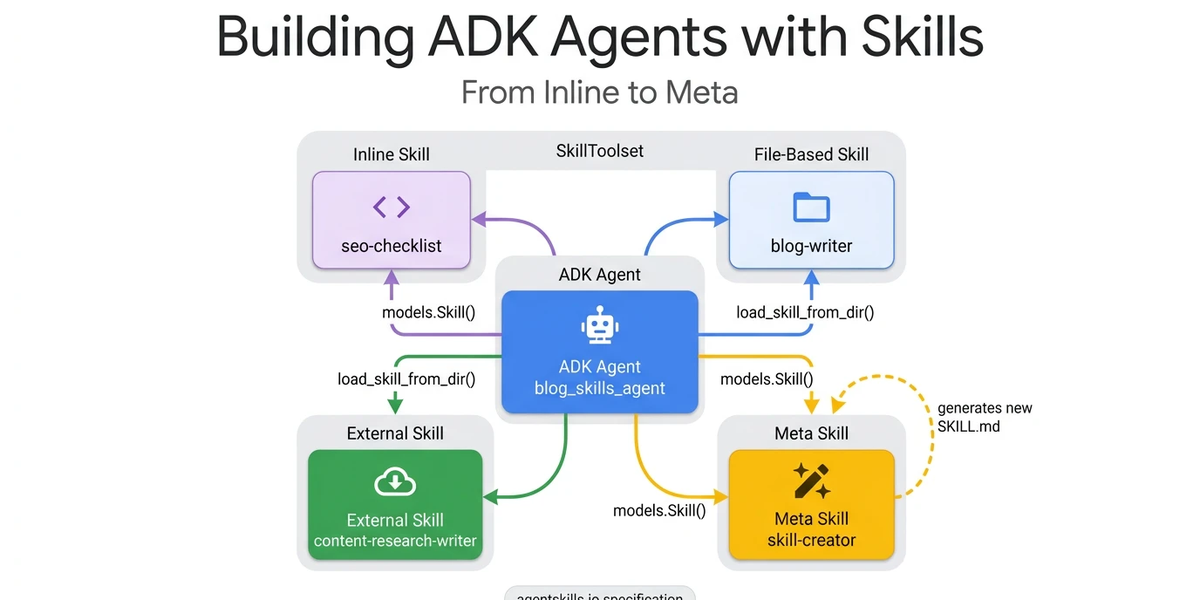
Upcoming Events
- Smashing Conference: April 13–16, 2026 - Amsterdam
- FITC Conference: April 27 - 28, 2026 - Toronto, Canada
- Google I/O 2026: May 19-20, 2026 - Live Virtual Event
- Frontend Nation: June 3-4, 2026 - Free Online Live Event




 The Google I/O team


💡 Bottom Line Up Front
The dominant theme this week is the operationalization of AI — moving from experimental features to embedded workflows. Google's internal Agent Smith system, JPMorgan Chase's performance tracking of Copilot usage, and China's government-level AI deployment targets all point to AI transitioning from a productivity option to an institutional expectation.
For frontend and Angular engineers specifically, two tooling changes merit attention: Karma's formal deprecation makes the Vitest migration a near-term priority, and Taiga UI v5's Angular 19 baseline means teams on older versions should begin planning upgrades. Staying current on these shifts will matter increasingly in both delivery speed and team assessments.
I hope you find these helpful. If you do, please share our blog with others so they can join our amazing community on Discord (link below)

Don't miss out – join our awesome community to grow as a tech enthusiast, and to help others grow.
As always, Happy coding ❤️
Sponsor Us:
Promote your product to a focused audience of 4600+ senior engineers and engineering leaders.
Our newsletter delivers consistent visibility among professionals who influence technical direction and purchasing decisions.
Availability is limited. Secure your sponsorship by contacting ahsan.ubitian@gmail.com